
Introduction
Let’s be direct: the rules of digital marketing have changed — and most businesses are still playing by the 2021 playbook. Ad costs on Google and Meta have climbed 30–60% over the past three years. AI-generated answers are now replacing the first page of search results for thousands of queries. And every niche, from fashion retail to B2B software, has become more competitive than ever before. Businesses that relied on a part-time social media manager and a small Google Ads budget are watching their results deteriorate — not because the channels stopped working, but because execution now demands genuine expertise.
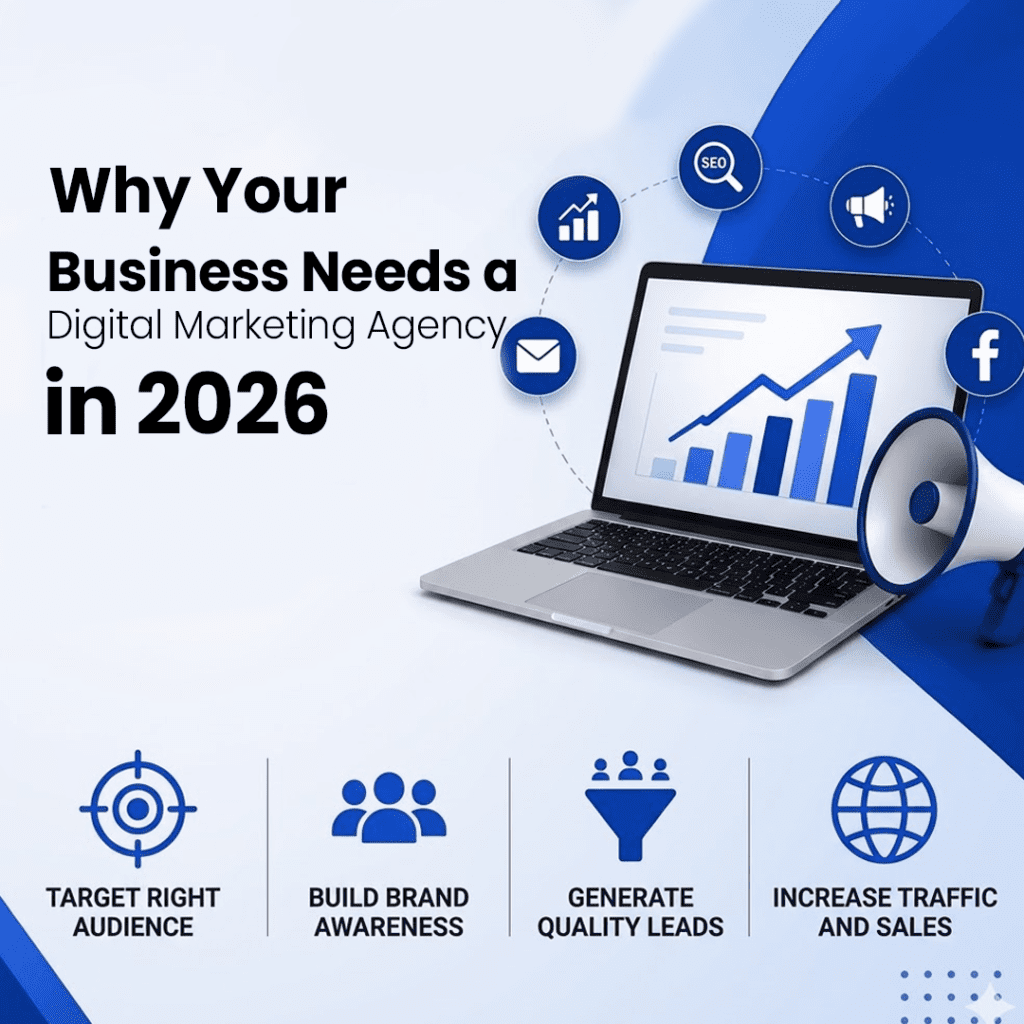
This is why the shift toward partnering with a professional digital marketing agency has accelerated sharply in 2026. Not just for enterprise companies — but for SMEs, ecommerce brands, local service businesses, and startups that finally understand the cost of doing it halfway.
This guide explains exactly what’s changed, what it costs to keep up, and why working with the right agency — particularly the best digital marketing agency in Lahore if you’re operating in Pakistan — is one of the highest-ROI decisions you can make right now.
What Has Changed in Digital Marketing in 2026?
The landscape has not gradually evolved. It has been restructured. Here’s what that means practically.
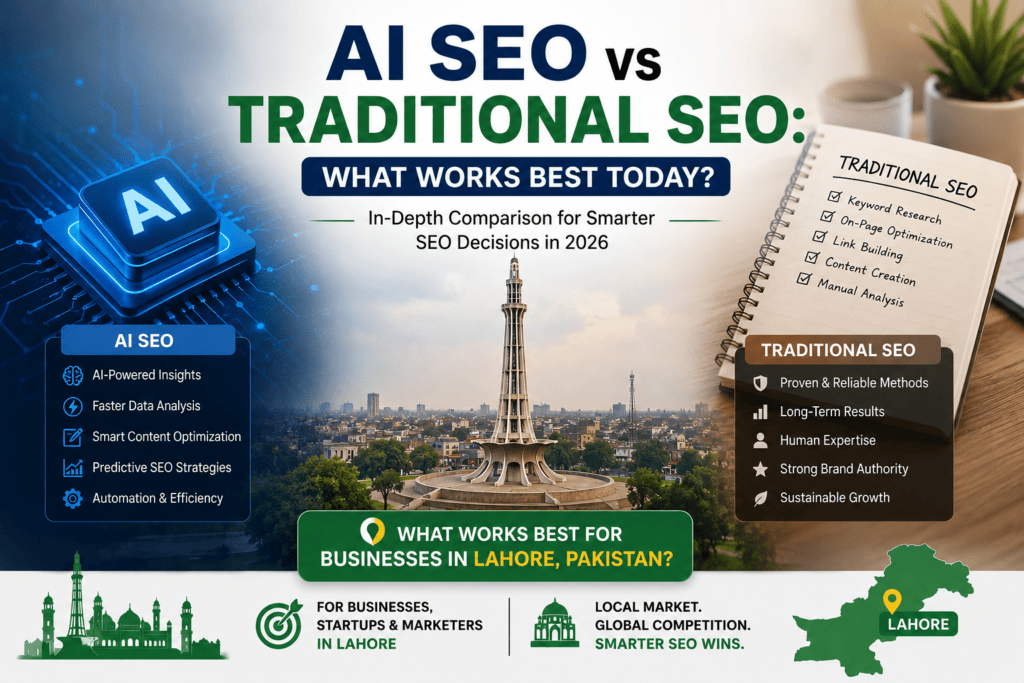
AI Search Has Reorganized Organic Traffic
Google’s AI Overviews, ChatGPT Search, Perplexity, and Gemini now answer a significant percentage of search queries directly — without a click. This is not a future threat. It’s happening today. Brands that built traffic entirely on transactional keywords with no content depth are seeing 20–40% organic traffic drops. The counter-strategy involves structured content, entity-based SEO, and being the source AI models quote — not just the page that ranks.
Multi-Platform Attribution Is Non-Negotiable
A customer who buys today may have first encountered your brand on a YouTube pre-roll, clicked a Meta remarketing ad three days later, and converted through a Google branded search. Single-touch attribution models misread this completely. In 2026, agencies that don’t operate with multi-touch attribution frameworks are actively misleading clients about what’s working.
First-Party Data Is Now a Competitive Asset
With third-party cookies effectively retired across major browsers, brands that built email lists, CRM data, and customer behavioral profiles are pulling ahead. Those without first-party data strategies are flying blind on audience targeting. Building this infrastructure takes time and expertise — it’s not a weekend task.
Video-First Marketing Is the Default, Not Optional
Short-form video (Reels, TikTok, YouTube Shorts) now drives brand discovery across virtually every consumer category. Even B2B decision-makers spend time in these environments. Brands without a video production and distribution strategy are invisible to an entire generation of buyers.
Conversion-Focused SEO Has Replaced Traffic-Focused SEO
High rankings mean nothing without a corresponding conversion architecture. The agencies delivering real growth in 2026 treat SEO and CRO as inseparable — optimising for intent, landing page quality, and post-click experience in a unified framework.
Why In-House Marketing Is Becoming More Expensive
Many businesses underestimate what building a capable in-house marketing team actually costs. Here’s a realistic breakdown.
Hiring Costs
A competent in-house marketing team for a mid-sized business in Pakistan requires at minimum: a digital marketing manager, an SEO specialist, a paid media specialist, a content writer, and a graphic designer/video editor. Salaries for these roles in Lahore’s competitive talent market now range from PKR 80,000 to PKR 250,000 per month per person. That’s PKR 500,000–900,000 per month in salaries alone — before benefits, recruitment fees, or onboarding time.
Tool Costs
Professional marketing requires professional tools: SEMrush or Ahrefs for SEO (USD 130–450/month), Google Analytics 4 with enhanced tracking, HubSpot or Klaviyo for CRM and email, Meta Business Suite, and video editing software. A complete stack runs USD 800–1,500 per month — tools that a quality agency shares across clients and builds into their service cost.
Training Costs
Digital marketing changes faster than almost any other professional discipline. Keeping an in-house team current on AI search, platform algorithm changes, and new ad formats requires ongoing training investment — conferences, courses, and the time cost of learning.
Opportunity Costs
The biggest hidden cost is time. When a business owner or operations team is managing marketing internally — even loosely — they’re not focused on product, customers, or growth strategy. This is the opportunity cost that rarely appears on a spreadsheet but matters most.
10 Reasons Businesses Hire a Digital Marketing Agency
1. Immediate Access to a Full Expert Team
A quality digital marketing agency brings a strategist, SEO specialist, paid media manager, content team, and analytics expert to your account from day one. Hiring equivalent in-house talent takes six to twelve months and costs significantly more.
2. Proven Systems and Processes
Established agencies don’t figure things out on your budget. They bring frameworks, SOPs, and campaign templates refined through hundreds of client engagements. This dramatically reduces the trial-and-error period that kills early marketing budgets.
3. Cross-Industry Pattern Recognition
An agency working across multiple industries identifies trends, tactics, and audience behaviours that siloed in-house teams never see. When a CRO technique tested in ecommerce proves transferable to a professional services client, that’s pure competitive advantage.
4. Scalability Without Fixed Overhead
During peak seasons or growth phases, an agency scales effort without the lag of hiring. When strategy shifts, the team pivots. There’s no redundancy cost, no notice period — just adjusted scope.
Access to Beta Features and Platform Relationships
Established agencies often receive early access to new platform features — new Meta ad formats, Google Ads experiments, or LinkedIn campaign tools — before general release. This time advantage compounds over competitors.
Performance Accountability
Unlike an employee who may remain in a role regardless of results, a quality agency’s commercial relationship depends on performance. The accountability structure is fundamentally different — and more aligned with your outcomes.
Integrated SEO, Paid Media, and Content Strategy
The agencies delivering the best digital marketing services in Pakistan in 2026 don’t operate in silos. This integration is nearly impossible to replicate in-house without senior leadership holding the whole picture.
Transparent Reporting and Data Ownership
Reputable agencies provide clients with full access to analytics dashboards, ad accounts, and campaign data. You own everything — the accounts, the data, the creative. This is both a trust signal and a practical protection.
Faster Iteration and Testing
Professional agencies run A/B tests on landing pages, ad copy, and email subject lines constantly. The compounding effect of systematic testing — 2–5% improvement per iteration across 20+ tests annually — produces results that linear strategy never matches.
Strategic Guidance Beyond Execution
The best agency relationships function as a strategic partnership. Your agency should be advising on product positioning, pricing strategy communication, customer lifecycle marketing, and competitive differentiation — not just running ads.
Real Case Studies: What Agency-Led Growth Looks Like
Case Study #1: Fashion Ecommerce Brand — 237% Revenue Growth in 8 Months
A women’s fashion ecommerce brand based in Lahore was generating PKR 1.2 million per month in online revenue, almost entirely from Instagram and word of mouth. Paid advertising was attempted but consistently unprofitable.
Our engagement began with a full audit: their product pages had no structured data, their Google Ads were running broad matches with no negative keyword lists, and their average landing page conversion rate was 0.8% — roughly a third of the category benchmark.
The first 90 days focused exclusively on foundation: SEO-optimised product and category pages, Google Shopping feed restructuring, and landing page redesign focused on reducing friction and building trust signals. By month four, organic traffic had grown 180% and Shopping ROAS had improved from 1.2x to 4.1x.
In months five through eight, we introduced Meta dynamic product ads with lookalike audiences built on first-party purchase data, alongside an email automation sequence for abandoned carts and post-purchase upsells. Total monthly revenue reached PKR 4.04 million — a 237% increase. Blended ROAS across channels: 5.3x.
Case Study #2: Local Service Business — 48% Reduction in Cost-Per-Lead
A plumbing and home maintenance company operating in Lahore’s DHA and Gulberg areas was spending PKR 180,000 per month on Google Ads with a cost-per-lead of PKR 4,200. They were getting leads — but not enough, and not profitably.
The problem wasn’t the ad budget. It was the landing page (a generic homepage with no click-to-call, no trust signals, and a load time of 6.4 seconds) and a Google Ads account structured without location bid adjustments or time-of-day scheduling.
We rebuilt the local SEO foundation first — Google Business Profile optimisation, service area pages for each neighbourhood, and review acquisition strategy. Within 60 days, 22% of leads were arriving through organic local results at zero ad cost.
Simultaneously, we rebuilt the landing page with click-to-call buttons, response time guarantees, photo testimonials from local customers, and a WhatsApp chat integration. Page speed improved to 2.1 seconds. Conversion rate went from 3.1% to 7.8%.
Case Study #3: B2B Company — 320 Qualified Leads in Six Months
A mid-sized HR technology company targeting corporate clients across Pakistan was struggling with lead quality. They were generating website traffic but couldn’t convert it to sales-qualified leads. Their sales team was spending hours per week on unqualified inquiries.
The strategy here centred on content-led authority building, LinkedIn demand generation, and email nurture automation.
We developed a content hub targeting decision-maker search queries: HR compliance challenges, payroll automation ROI, and workforce planning frameworks. Each piece was mapped to a specific stage of the buying journey. LinkedIn sponsored content promoted gated resources — a salary benchmarking report and an HR compliance checklist — to a defined audience of HR Directors and CFOs at companies with 100+ employees.
Leads entering via these assets were enrolled in a six-email nurture sequence before being passed to sales. By month six, 320 sales-qualified leads had been generated.
What Makes Our Agency Different?
The digital marketing services in Lahore market has grown — and with it, so has the number of agencies offering promises without infrastructure. Here’s how we operate differently.
Strategy-First Approach: Every engagement begins with a discovery phase. We don’t launch campaigns before understanding your commercial model, competitive position, and customer acquisition economics. Strategy precedes execution.
Dedicated Account Manager: One person owns your relationship, knows your business deeply, and is your single point of contact. No rotating junior staff, no hand-offs between departments.
Monthly Reporting with Real Numbers: You receive monthly reports that show revenue impact, not just impressions and clicks. We connect marketing activity to business outcomes.
Transparent Communication: We tell clients when something isn’t working before they ask. We share test results — including failures. We don’t hide behind vanity metrics.
Data-Driven Decision Making: Every recommendation is supported by data. We use analytics, heatmaps, session recordings, and customer surveys to inform strategy — not assumptions.
Conversion-Focused Campaigns: Traffic is an input. Revenue is the output. All our campaign design, landing page work, and creative testing is focused on one question: does this convert?
Social Proof and Client Success
The numbers that matter most to us are the ones our clients report to their own stakeholders.
Our average client retention rate is 91% after 12 months — significantly above the agency industry average of 65–70%. This reflects the quality of results and relationships, not lock-in contracts.
Across ecommerce clients, our average blended ROAS at the 12-month mark is 4.7x. For lead generation clients, average cost-per-lead reduction in the first six months is 35%. Our SEO clients see an average organic traffic increase of 140% in the first year.
These are not cherry-picked outcomes. They represent medians across our active client base, audited quarterly.
We are also one of the few advertising companies in Lahore with a documented client performance benchmark — shared at onboarding so clients know exactly what realistic outcomes look like at three, six, and twelve months.
Our Policies and Performance Commitment
Ethical SEO and White-Hat Link Building
We do not engage in link schemes, keyword stuffing, cloaking, or any practice that violates Google’s quality guidelines. Our link acquisition strategy relies on content-driven outreach, digital PR, and relationship-based partnerships. These results take longer to build — but they last.
Transparent Reporting
You have full access to your advertising accounts, analytics dashboards, and all data at all times. When you work with us, you own everything. If you leave, you take it all with you.
Compliance-First Marketing
We operate fully within platform terms of service, data protection regulations, and Pakistan’s emerging digital advertising standards. Our email marketing is fully opt-in. Our ad targeting complies with Meta and Google data use policies.